
Make a Difference. Act.
Get Involved
There are many ways you can help make your community, our state, and our country, better. Here are just a few actions you can take to make a difference.
It’s also important to keep track of issues before your local boards and councils, as well as the Sawyer County Board and Wisconsin Legislature.
Attend meetings in person or online, and contact local officials about issues you care about. Responsible citizenship includes holding officials accountable, as well as voting.
Support BadgerCare Expansion
Updated June 1, 2026
In early May 2021, Wisconsin legislative Republicans voted to remove 380 items from Gov. Tony Evers’ proposed biennial budget, thereby rejecting $1.6 billion in federal funds the state would have received for expanding BadgerCare. BadgerCare, short for BadgerCare Plus, is a type of Medicaid program.

Republican legislators have refused to expand BadgerCare ever since the Affordable Care Act first passed 12 years ago. As a result, Wisconsin remains one of 10 states that has not expanded Medicaid and similar programs like BadgerCare.
Republicans also have continued to hollow out the ACA, with their latest action the elimination of ACA expanded subsidies on Dec. 31, 2025. Their cruel and misguided policies prevent hard-working, low-income Wisconsinites from receiving the same health care benefits legislators themselves receive.
Democrats continue the fight to broaden access to health care benefits across the state. That includes the expansion of Badger Care.
Learn more.
BadgerCare Plus | Wisconsin Department of Health Services
Take action.
Call your state legislative representatives and tell them to show common sense and compassion and expand BadgerCare.
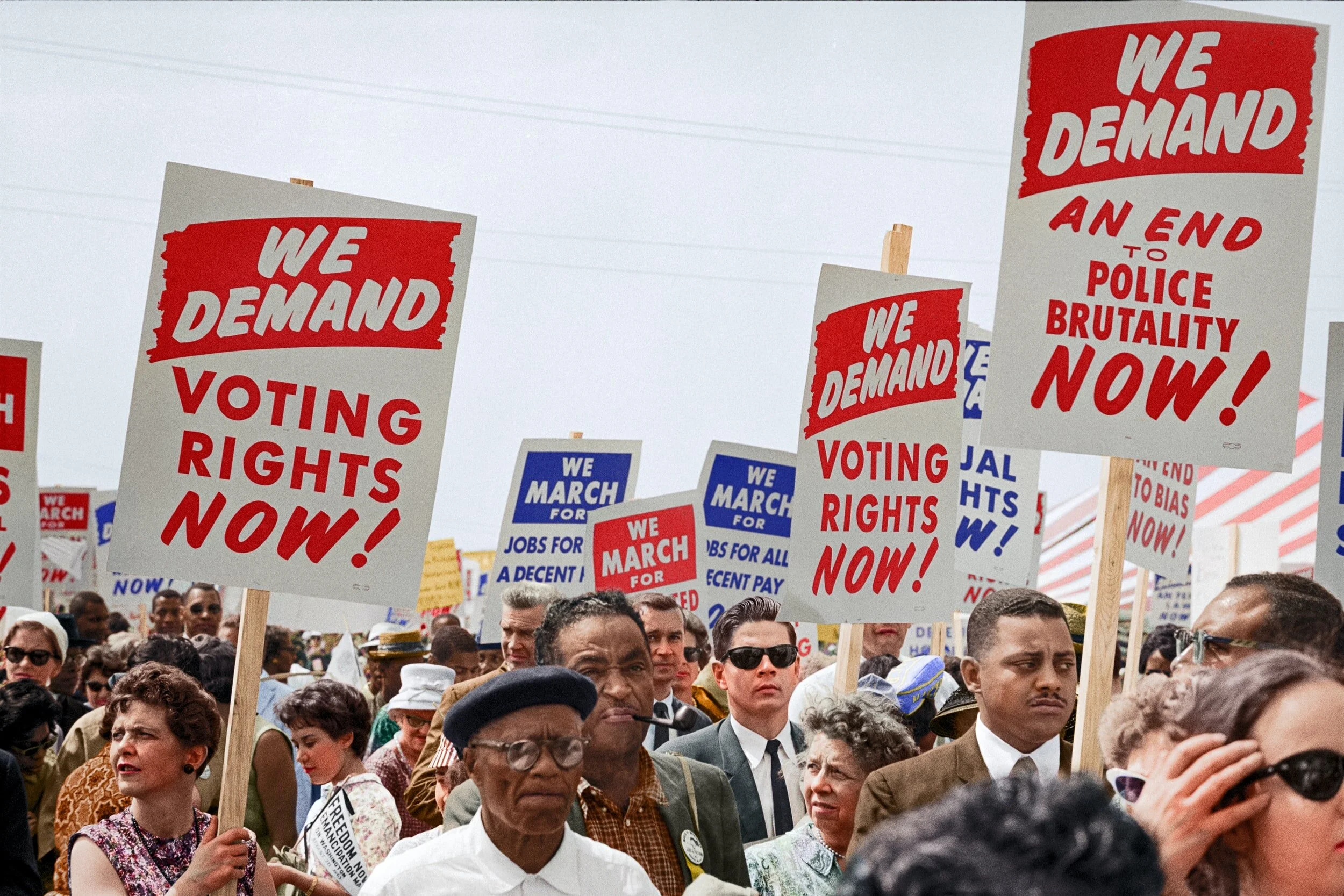
Protect Voting Rights
Updated June 1, 2026
According to the Brennan Center for Justice and the American Civil Liberties Union (ACLU), voting rights in the U.S. are under significant threat from legislative, judicial, and partisan actions that disproportionately affect minority communities and could reshape political representation.
Legislative and Partisan Efforts
In recent years, election deniers and some Republican lawmakers have pursued policies aimed at restricting access to the ballot, undermining voter registration, and enabling partisan interference in elections. These efforts intensified after the 2020 presidential election, fueled by false claims of widespread voter fraud, and continue to be promoted in Congress and state legislatures. Measures include purging voter rolls, closing polling locations, and imposing stricter ID requirements, which disproportionately impact Black, Hispanic, and other marginalized voters.
Judicial Challenges and Supreme Court Decisions
A series of Supreme Court rulings has weakened key protections under the Voting Rights Act, particularly Section 2, which historically allowed challenges to electoral maps that diluted minority voting power. For example, the Court’s decision in Louisiana limited the creation of Black-majority districts, opening the door for Republican-led states to redraw maps in ways that could reduce minority representation in Congress. States like Georgia, Alabama, Mississippi, and Texas are actively pursuing or defending redistricting plans that critics argue diminish Black and Hispanic voters’ influence.
Impact on Minority Communities
These combined legislative and judicial actions threaten to disenfranchise millions of eligible voters, particularly in communities of color. Redistricting and voter suppression tactics can weaken majority-minority districts, reduce political influence, and shift the balance of power in Congress toward partisan advantage. Civil rights organizations warn that without intervention, these attacks could have long-term consequences for Black political representation and broader democratic participation.
Responses and Advocacy
Voting rights groups, including the ACLU and the DNC, are actively fighting these efforts through litigation, public advocacy, and voter education campaigns. They have successfully blocked some last-minute voter purges, challenged gerrymandered maps, and defended mail-in voting rights. Advocates emphasize the importance of protecting electoral power for racial minority groups and ensuring that all eligible voters can participate in fair elections..
Conclusion
The current landscape of voting rights in the U.S. reflects a coordinated effort by some political actors to restrict access to the ballot and reshape representation, particularly affecting Black and other minority communities. Ongoing advocacy, legal challenges, and public engagement remain critical to safeguarding democratic participation and ensuring that elections remain fair and inclusive.
Learn more.
American Civil Liberties Union
Take action.
Contact your elected representatives at state and national levels to urge support of legislation upholding voting rights.
Volunteer with the Democratic Party of Wisconsin (WisDems) to register voters and get them to the polls.
Oppose Line 5 Pipeline Relocation, Protect Clean Water

The Democratic Party of Sawyer County and Lac Courte Oreilles Reservation opposes the relocation of Enbridge’s Line 5 oil pipeline in northern Wisconsin.
Line 5 is an existing pipeline running from Superior to the upper peninsula of Michigan through the Straits of Mackinac and lower peninsula of Michigan to Canada. Line 5 currently crosses through approximately 12 miles of the Bad River Reservation of the Bad River Band of Lake Superior Chippewa.
Enbridge proposes to relocate a 41-mile-long portion of the existing Line 5 pipeline around the Bad River Reservation. The reroute lies within Ashland, Bayfield, and Iron County, Wisconsin. Enbridge must receive all necessary local, state, and federal permits and/or approvals before construction of the Line 5 relocation project can begin.
Learn more.
End Wolf Hunt Abuses
Check out these websites for more information:

Support Transformative Police Reform

The murders of black Americans George Floyd in Minneapolis and Breonna Taylor in Louisville by white police officers in 2020 proved a tipping point that resulted in the introduction of the George Floyd Justice in Policing Act in the U.S. House of Representatives in February 2021. The bill passed the Democratic-controlled House on a mostly party-line vote of 220–212, but it has not yet been voted upon by the Senate.
In Wisconsin, which saw the police shooting of Jacob Blake in Kenosha in August 2020, a number of police reform bills have been introduced at the Legislature. However, activists say the bills fall far short of the transformative change needed to end the ongoing epidemic of police violence against people of color.
It’s important to convey your support of meaningful policing reform to both state and congressional representatives.
Learn More.
Here's what the George Floyd Justice in Policing Act would do (nbcnews.com)
Wisconsin Democrats Introduce More Progressive Police Reform (upnorthnewswi.com)
Take Action.
Contact Sen. Tammy Baldwin (D-Wis.) to thank her for her support of the George Floyd Justice in Policing Act.
Call your state legislative representatives and tell them to support meaningful policing reform.

Area residents at Democracy Square in Hayward following the murder of George Floyd in 2020.